
Resume and LinkedIn:
Taking time away from work is far more common than it feels. In my coaching sessions, I have seen a lot of people navigating long-term unemployment after a layoff. Therefore, I went digging for the data. It turns out that when a layoff ends a role, the search runs long for almost everyone. According to the U.S. Bureau of Labor Statistics, the average stretch of unemployment in early 2025 was about 22 weeks.
That is more than five months.
And roughly one in four people looking for work had been searching for 27 weeks or longer (which is more than six months). I can’t find data to prove it, but I suspect those unemployment timeframes are longer today.
Layoffs are only part of the picture. In a LinkedIn survey of nearly 23,000 professionals, 62% said they had chosen to take a career break at some point in their careers, most often for mental health, a medical leave, or caring for family.
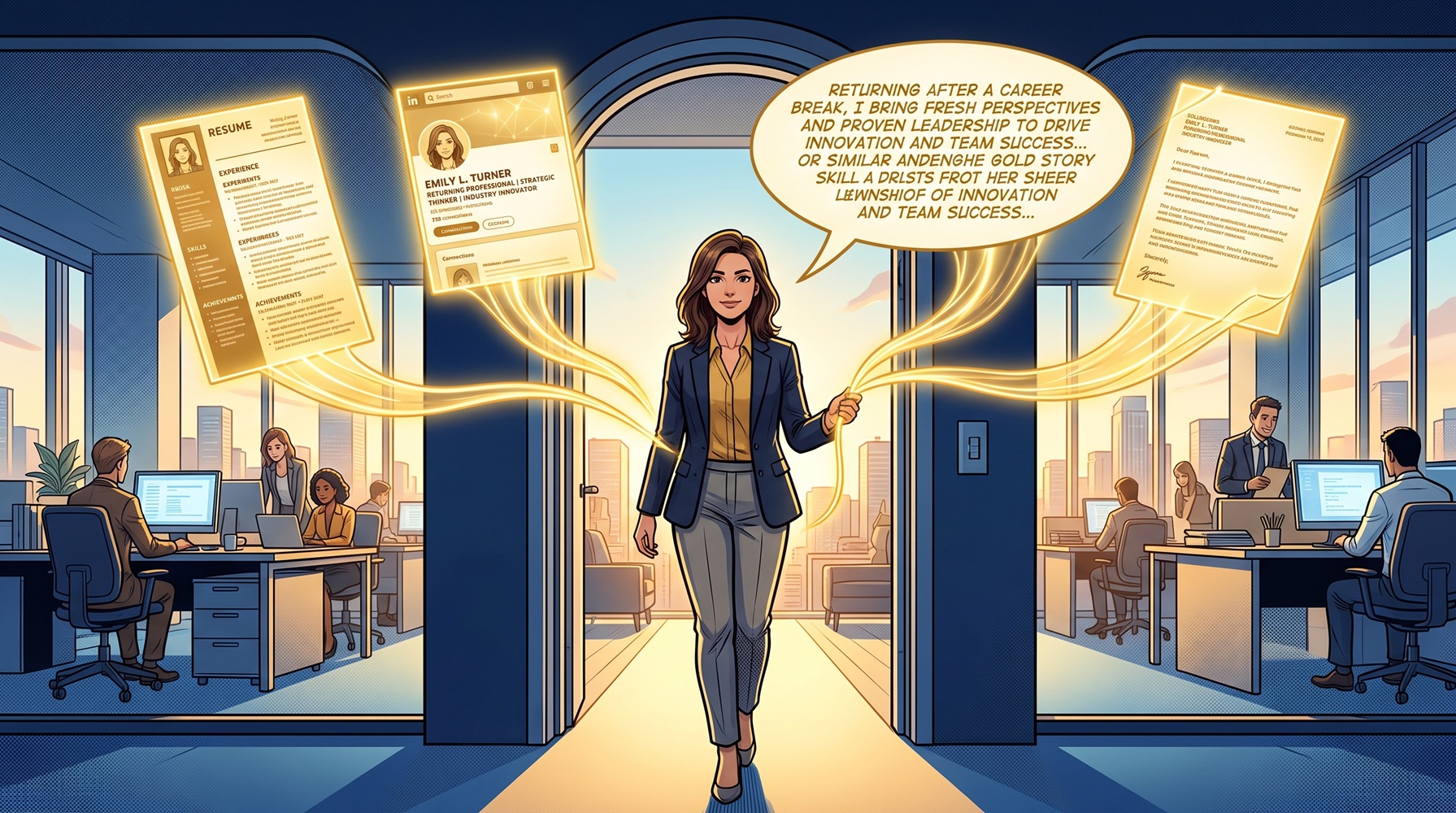
So even though a career break is normal for most professionals at some point, coming back can still feel daunting. The fear underneath is usually the same: that no one will take you seriously after the time away, and that you will have to explain the gap again and again. Additionally, the search itself has changed since you were last in it. The last time many of us looked for a job, a resume was the whole game. But now your resume and LinkedIn are only the start, joined by your cover letter and the way you talk about your time away in an interview.
That is four things
When you were only expecting to update your resume, realizing there are four things to consider may feel overwhelming. But these aren’t four things to master. They are one story, told four ways, to different people at different moments. Once you see it that way, the overwhelm should settle.
Your one story is simple to tell: who you are and what you are good at, backed by the real results you have delivered. You know this detail because you have lived it (it is your story, after all). Write it down in a few plain sentences on a blank sheet of paper. Then it becomes easier to shape into job search assets that work for you.
Said differently, you translate your story into “the four”.
- Your resume is that story shaped for one specific role.
- Your LinkedIn is that same story made findable, because recruiters and hiring managers search LinkedIn to find people (often before a role is ever posted). As a side note, your resume and LinkedIn have to tell the same story, or a recruiter who checks both starts to wonder which one is true.
- Your cover letter is that same story aimed at one company’s specific need. This asset bridges your experience to the company’s pain, explaining how you solve it.
- Your elevator pitch is that same story, spoken, with one honest, unhurried sentence about your time away, followed by why you are ready and why this role fits.
Let’s talk about the fourth job search asset
That fourth asset is where your break actually comes up. Yes, you will be asked about the gap (over and over again), but how you answer matters far more than the reason for it. Gaps have become common enough that a hiring manager usually isn’t asking because they are concerned about the time you were away. They want to see how you handle the question. So answer it briefly and honestly, then bridge straight back to your value and the role.
The move that actually costs people the offer isn’t the gap; it is a cover-up, stretching an end date or talking around the time away instead of addressing it directly. We walk through the exact wording for your resume, your LinkedIn, and the interview in our article titled “How to Explain an Employment Gap (Step by Step),” so your break becomes one line, and your career gets the rest of the attention.
Start Here
Start by writing your story in a few plain sentences: who you are, what you do well, one piece of proof, and one honest line about your time away. Everything after that, across all four job search assets, will be much easier to put together
Returning doesn’t have to mean starting over. Even though the job search playbook changed while you were away, it is learnable. When you want a hand lining up your resume, LinkedIn, cover letter, and pitch so they tell one confident story, that is the work I do with returning professionals every day. Reach out any time.
To Your Success,
Angela Roberts, Managing Partner of craresources