
Resume Bullet Points:
I am hearing this a lot in my webinars and office hours, and seeing it in my inbox: candidates just don’t understand why, in today’s job market, they can apply to dozens or hundreds of jobs but get no response. Not a rejection, certainly not a phone screen, and not even an automated “we have moved forward with other candidates” note. Zero response. And what baffles these candidates the most? They are using the same resume they used ten or fifteen years ago when they were hired quickly (if not almost immediately).
It’s logic…right? That resume worked before, so it should work now. So why the silence? Is it your age? Or a hiring team looks at your credentials and decides you will cost too much…? And I see this a lot: you are too senior for the role, so you might leave the moment something better comes along (so why bother considering your application).
There are a hundred reasons to believe the problem is you.
But in most cases, it isn’t any of those reasons. Now, I am not going to tell you ageism doesn’t exist, because it does. Even if it isn’t consciously practiced by the hiring team, it can come into play unconsciously (we can help with that here). But when the role isn’t a bridge job, and ageism isn’t the story, what is left? Nine times out of ten, the issue lives in your experience section. Not the experience itself… not the company, the title, or the dates. It is a problem with the resume bullet points.
The details in your resume bullet points are what cost you the callback.
My team screens resumes every single day, and the resume experience section is where a surprising number of strong people lose the reader, purely because of how they positioned their experience. I am going to walk you through three of the ways I watch it happen because once you see them, you cannot unsee them in your own resume.
The Client Who Rejects a Repeated Bullet on Sight
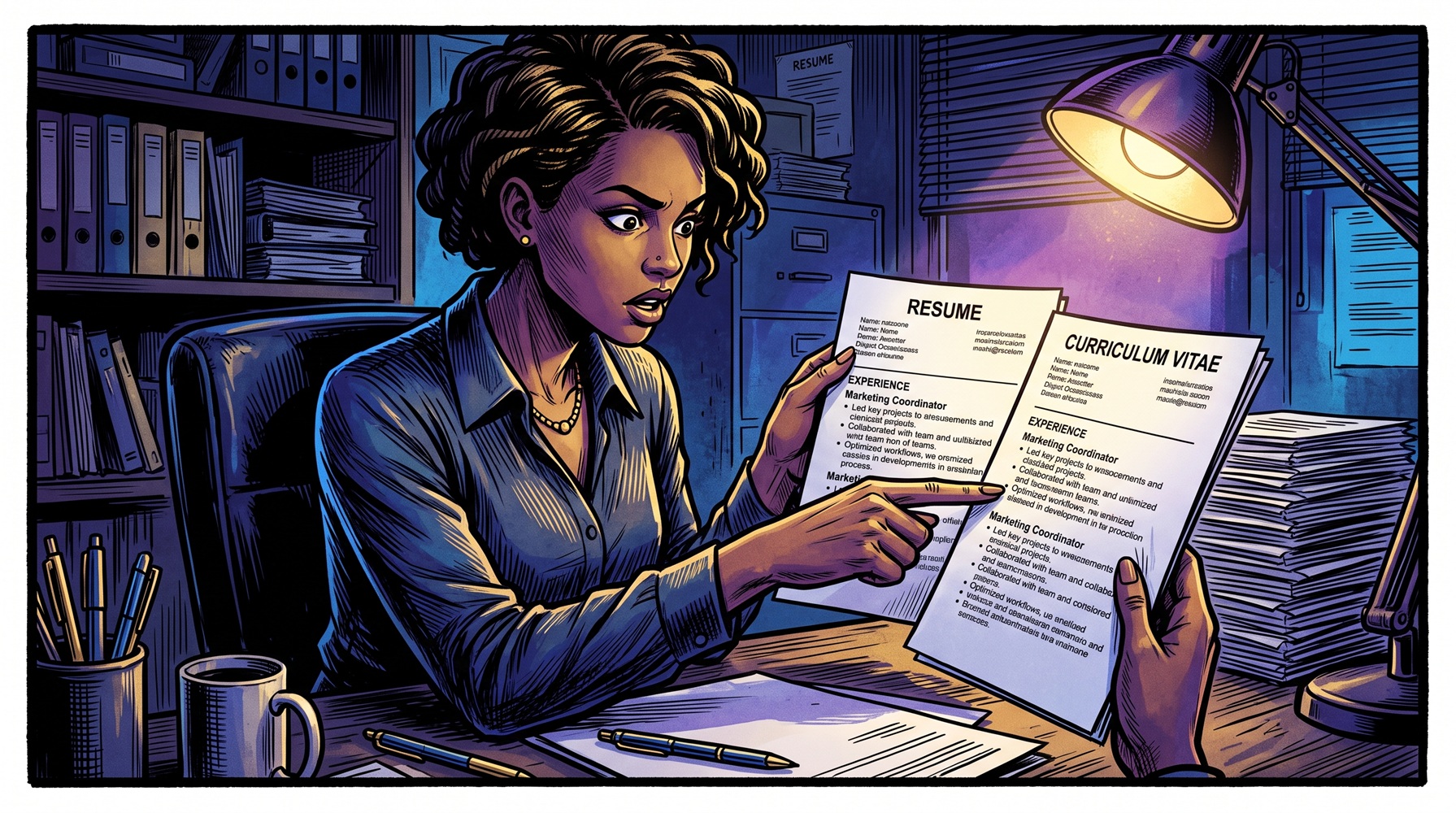
We have a client who will automatically reject a candidate the moment she sees the same bullet point across more than one role. “Monitored Phase I oncology studies.” “Performed SIVs, IMVs, and closeout visits.” When that identical line shows up in two or three experiences, that resume is done.
I think she is being harsh when she does this. But I understand where she is coming from. Yes, a CRA is a CRA, and the baseline monitoring competency will stay fairly consistent from role to role. But the job itself? It doesn’t stay the same. The therapeutics and indications change. The number of sites, the challenges those sites threw at you, the protocol itself, and everything that went sideways on the project. Additionally, the team and its culture and even your specific role can vary…maybe you picked up site management or ran some study startup.
All of that varies from role to role.
What did you achieve in each of those seats? Did you learn anything? Solve any problems? What was different because of you?
When this client sees plain task repetition instead of your story, she reads it one of two ways. Either the candidate isn’t authentic, which stings because we would have already vetted them (so we know you are a real candidate with real qualifications). Or the candidate is too lazy to tell her own story.
I don’t think either one is necessarily true…but you need to see that this is how it lands on the other side of the desk in today’s market.
The Copied-and-Pasted Job Description
The second thing I often see is a candidate who copies the job descriptions from their previous positions and drops them straight into the resume. In some cases, the font size, style, and even the color change from one experience section to the next. The bullets and formatting are also usually a mess. Why? Because they pulled those descriptions off a website and plunked them into the body of their resume.
It is a poor first impression, and it starts with the formatting. The tables, the tabs, and the bullets aren’t used properly, and those are all flags. Why would I hire a CRA to monitor a study and write a critically important report when I cannot trust them to put together their own resume? You can call it laziness. Someone kinder might call it efficiency. Either way, a pasted job description only states what you were hired to do. It states what you were responsible for. But it says nothing about what you actually did, and nothing about how well you did it. And there we are, right back at the proof: what was unique about each position, what problems you solved, what challenges you had to overcome, and what changed because you worked there.
The CRO-Branded Resume
The third one is important, so pay attention if you work for a CRO. Because you work there, you probably have a branded resume on the CRO’s letterhead, in their format, and using their style. Maybe even with their language under their specific experience section. Some of these CRO-Branded resumes will list the studies you have worked on. But all of them show what you are responsible for. They tend to be generic, and often the tasks aren’t even in bullet form, but the details run in paragraphs that are hard to read and harder to absorb.
Think about why that CRO-Branded resume exists.
The CRO has you put your credentials on their letterhead so they can represent to their sponsors what you are qualified for and what you will be responsible for on the project. It is almost a contract between them and the sponsor. And guess what? That is a completely different reason for a resume to exist than what you would use one for: getting you a new job.
So when you send that CRO-logo resume to my firm or to another one, you show us three things. You are missing the point of a resume. You are being lazy. And you are making it very hard for me to see what you actually did, because that document reads the same for every CRA at that CRO. There is a fourth problem for a firm like mine: I cannot represent a resume that sits on another company’s letterhead without a conflict.
Use your voice to craft your resume.
Your experience section has to show what you did for that company, that project, and that team. Start from the responsibilities if you like, then tailor them into what you specifically did, articulated to show your skills and your competency.
Here is the part that should land for you. Many of us in this industry are pushing hard for competency-based hiring, and every CRA I have spoken with on this topic agrees they should be hired for their skills and competency, not for the ‘number of years’ they have performed the task or role. So if you agree you should be hired for your competency, you are going to have to give the industry the details of your work. Show your competency. Outline your capabilities. Share your story. And the best way to do that is with proof: the proof points that should live in the experience section of your resume.
All Three Stories, One Problem
Pull those three stories together, and they are the same problem wearing different outfits. A resume built from responsibilities instead of proof statements is generic and vague, and it will not separate you from everyone else you are competing against. It will also not separate you from the candidates who are embellishing or falsifying their credentials, because they have to make things up, and ‘made up’ tends to be vague because vague is safer when it is a lie. And it will not separate you from the AI ghost candidates either, because they have nothing real to share.
A real career leaves footprints. Every role has you in it, because you worked there and you made a difference. Your experience section is where you show that difference, and where you show why it mattered that you were the one in the seat. So take out the duties and the “responsible for” statements, and layer in the mini stories, rich with proof of what you did for the team, the project, and the company.
Do This One Thing Today
Take one of your resume bullet points, the first one that starts with “responsible for,” and rewrite it so it names the study or the therapeutic area, the scope, the problem you solved, and the result in real numbers. Then read down your resume bullet points and make sure no two roles repeat the same line. That single rewrite will already sound less like everyone else and more like you.
When You Want a Hand
Your experience is real. Your resume just isn’t showing it yet. Helping experienced professionals turn a generic experience section into proof of what they actually did is the work I do every day. When you want a hand doing exactly that, reach out anytime.
To Your Success,
Angela Roberts, Managing Partner of craresources