
Getting Interviews But No Offers: 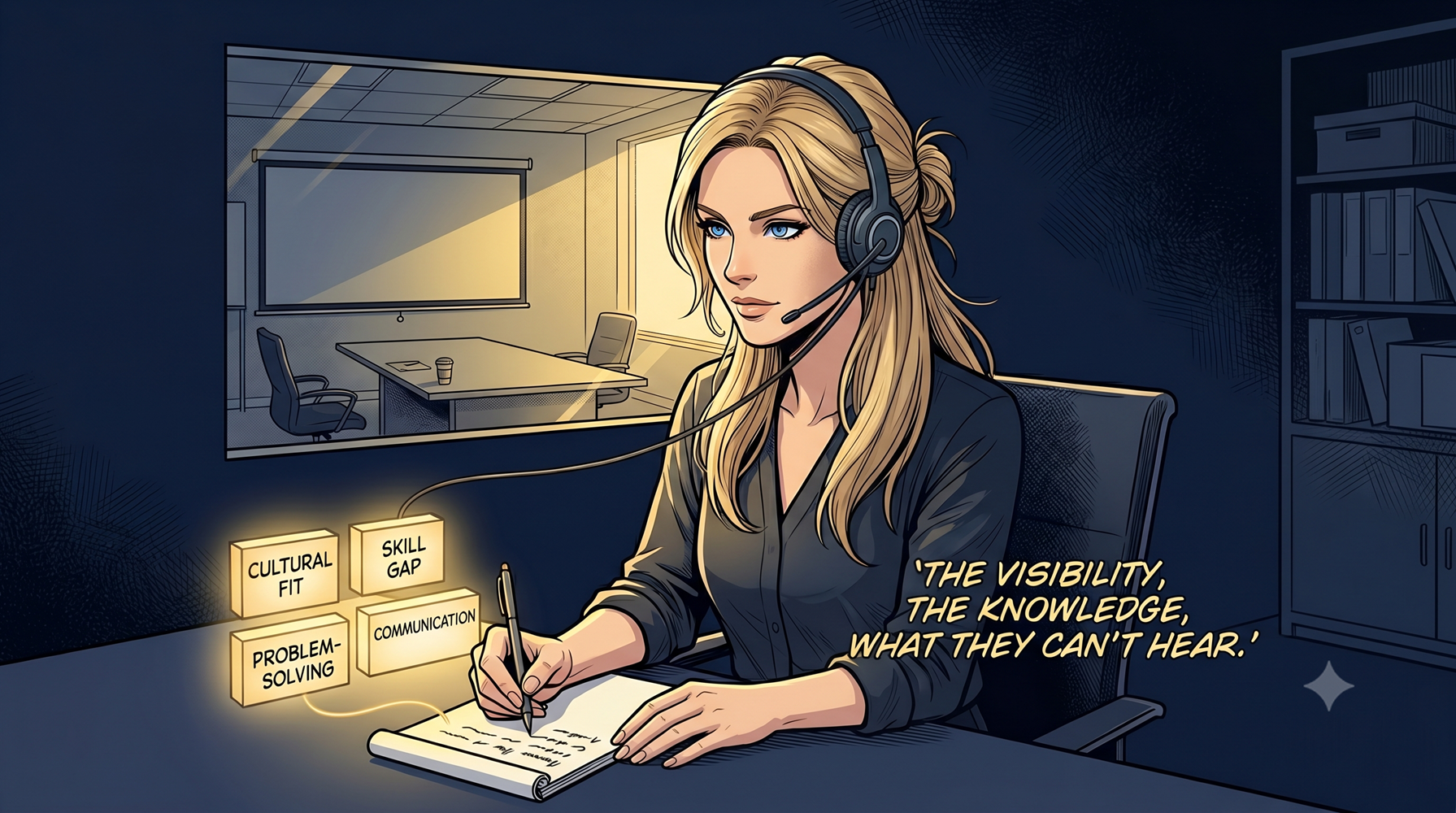
In our recruiting practice, we sit on the receiving end of the post-interview debrief. After the panel meets and the hiring manager calls us back, we hear what was actually said in the room. And in our experience, there are four primary reasons why qualified candidates are consistently getting interviews but no offers.
I will start by stating that hiring managers rarely tell a candidate why they didn’t extend the offer. Unfortunately, the candidate is left guessing as to why…so when a strong clinical research professional racks up four, five, six interviews without an offer, they reach for the worst explanation available: it must be me.
Most of the time, it isn’t.
It is usually one of four patterns we see over and over again across our pharmaceutical, biotech, medical device, and CRO clients.
Pattern One: Storytelling
The most common debrief comment we hear is some version of, “He seemed qualified, but I never got a clear example of him actually doing the work.” Behavioral interviews are won and lost on specific stories. When a candidate answers a “tell me about a time” question with a hypothetical (“I would handle it this way…”), or with generalities, the interviewer can’t picture the candidate doing the job.
The net? They can’t defend a hire decision when they can’t picture the candidate performing in the role.
The fix? Craft and practice elevator pitches. We show you how in these posts and real podcast examples.
Pattern Two: Enthusiasm for the Specific Role
This one sounds like, “She was good, but I don’t think she really wants this job.” The candidate may have wanted the job badly. But if every answer could have been delivered to any sponsor or CRO in the industry, the hiring manager hears interest in a job, not interest in this one.
And this is especially important in a final interview (or even an advanced round interview). The manager is choosing the person who already feels like part of the team. Generic enthusiasm reads as risk….and this is why ‘anything with a paycheck‘ backfires for candidates.
Every hiring manager wants to believe that you have hand-selected their particular position. If you can’t show your passion for this particular role, your candidacy won’t be taken as seriously.
Pattern Three: Alignment to the Employer’s Actual Problem
“The skills are there, but I’m not sure he has solved our version of this problem.” Clinical research experience doesn’t translate itself. A CRA moving in-house, a functional expert pivoting into CRO leadership, a Site Manager moving into a sponsor role…the experience is real, but the candidate hasn’t done the work of connecting it to the role in front of them.
The interviewer is left to do that work, and most won’t. The biggest mistake most mid-career job seekers make is to sell their history instead of their skills. You have to get detailed, get specific, and become personal.
Pattern Four: Perceived Risk
This is the quietest reason and the most common in advanced rounds. The candidate is competent, but not the easiest hire to defend internally. Hiring teams don’t only choose the most qualified person on paper. They choose the person who feels lowest-risk: easiest to manage, easiest to onboard, least likely to create friction.
A technically excellent candidate who shows any tension around feedback, coachability, or fit will lose to a slightly less polished candidate who feels safer.
Some Final Thoughts
If you are a clinical research professional reading this and feeling the sting of recognition…that is useful information. Each pattern has a repair, and the repair starts with naming which pattern is yours. We offer support for that!
And if you are a hiring team frustrated by the search for a high-quality clinical research candidate, we see the trends and continually update our recruitment process to adapt and refine. That is most of the value of working with a niche firm: we sit in both rooms, hear both sides, and translate. Reach out to find out how we can work together.