
One-Way AI Interviews:
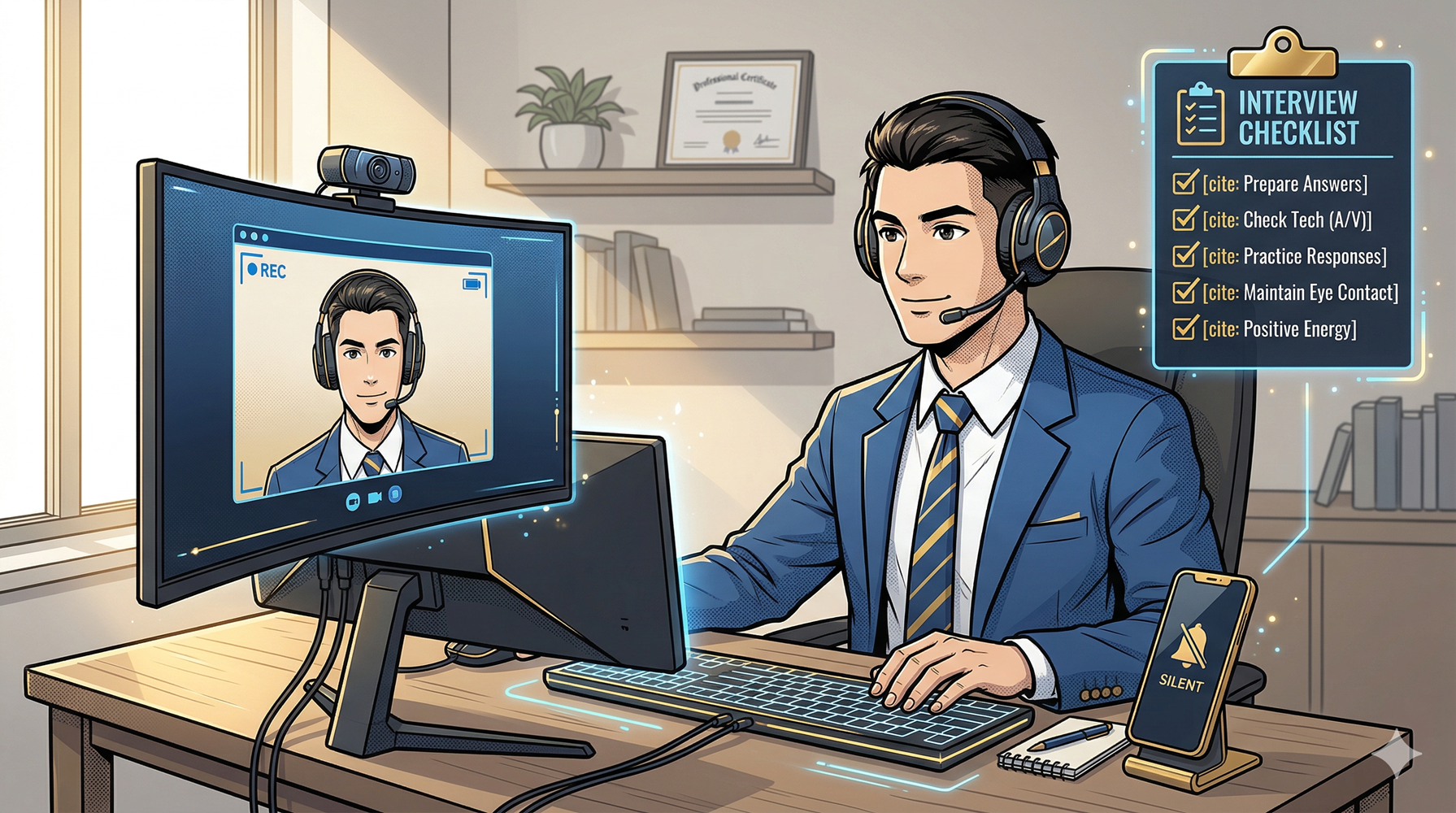
One-way AI interviews are changing the hiring approach. Why? Because now we are hiring people through a screen, a timer, and a whole lot of awkward silence.
Wonderful.
One-way AI interviews, also called asynchronous or pre-recorded interviews, have become a normal part of the hiring process for many employers. Instead of a live conversation, candidates record answers to preset questions, and the responses are reviewed later by recruiters or hiring teams, sometimes with AI-supported tools that help organize or evaluate the results.
For companies, the appeal is efficiency. But for candidates, the experience can feel cold, unfamiliar, and a little absurd.
Whether we love the format or not, it is here. And job seekers need to know how to handle it.
What the format is
A one-way AI interview is a recorded interview where you answer questions without a live interviewer present. In many cases, the platform gives you a short amount of time to prepare and a limited amount of time to respond.
That means the format isn’t about conversation. It is about clarity.
You are being judged on how well you communicate under a controlled setup, how directly you answer the question, and how confidently you present your experience. There is no back-and-forth to rescue a rambling answer and no human nodding along while you find your words.
And that is why preparation matters more here than in a traditional interview.
Why companies use it
Employers use one-way interviews for a few practical reasons. They help reduce scheduling headaches, speed up early screening, and make it easier to compare candidates using the same set of questions.
That part is easy to understand. If a company has a large applicant pool, it is much simpler to review recorded responses than to coordinate dozens of live screening calls.
The other reason companies are embracing this interview methodology is consistency. A standardized format can help hiring teams evaluate more candidates with the same basic structure. In theory, that creates a more organized process.
In practice, though, it also creates a process that can feel impersonal from the candidate’s side. So while the format may be efficient, it is still important to understand how to perform well within it.
What candidates gain and lose
There are a few benefits to one-way interviews.
You can complete them on your own schedule, control your environment, and prepare your answers before you start recording. That gives you more flexibility than a live interview, where you have to think on your feet in real time.
But the tradeoff is real.
You don’t get to build rapport, you don’t get clarifying questions to keep you on track, and you don’t get a chance to recover naturally if your first answer starts badly. And if the camera setup is poor, the audio is off, or the timing is awkward, the interview can become harder than it needs to be.
So yes, the format can work in your favor. But only if you understand how to use it.
How to prepare
Preparation for a one-way interview should be deliberate, not casual.
Start with the role. Know what the job actually requires. Then think about the stories from your career that best match those requirements. If the role is client-facing, prepare examples that show communication and problem-solving. If it is leadership-heavy, prepare stories that show judgment, ownership, and decision-making. Here is a Behavioral Interview Question Worksheet that can help with preparation in these key areas.
Next, practice out loud with a timer. This is important because one-way interviews often limit how long you can speak. If you ramble, you run out of time. If you speak too fast, you sound rushed. Notes are useful. But a word-for-word performance isn’t, because if you sound too scripted, you will lose credibility…you may even sound fraudulent. Just don’t do it.
A simple framework that helps is the SARB approach. It is similar to the STAR interview methodology, but it goes one step further by focusing on outlining the benefit for each example:
- Situation.
- Action.
- Result.
- Benefit.
That structure keeps your answer focused and makes it easier for the person reviewing the interview to follow your point.
Your setup matters
The technical setup is part of the interview.
- Choose a quiet room.
- Use good lighting.
- Put your phone on silent.
- Check your microphone and camera before you begin.
- Make sure your background is clean and your face is visible.
These details are not cosmetic. They affect how polished and professional you appear.
You should also look at the camera while answering. It sounds simple, but it changes how connected and confident you seem on screen. If you keep staring at your own image, you will look distracted. But if you look into the camera, you look like you are making eye contact…thus engaged.
A strong answer in a bad setup can still lose momentum. A solid setup makes it easier for your answer to land the way it should.
What to do when the timer starts
When the question appears, don’t waste the first several seconds overthinking it.
Read the prompt. Take a breath. Answer the actual question.
That sounds obvious, but people often make this harder than it needs to be. They give too much context, bury the point, and spend half the recording getting to the actual answer.
Don’t do that.
Lead with the answer. Then give one strong example. Then stop.
If they ask about conflict, explain how you handled conflict. When you are asked about leadership skills, provide an example that exhibits leadership. If they ask about problem-solving, walk through the problem and the result.
I recommend you put together elevator pitches that answer these primary questions. Here are some elevator pitch examples and templates to help.
Just remember: keep it direct. Keep it clear. That is the entire game.
Final thoughts
One-way AI interviews are becoming part of modern hiring, whether job seekers are thrilled about it or not. That means the people who prepare for them properly will have an advantage.
You don’t need to be flashy, and you don’t need to sound like a television host. But you do not need to outsmart the software.
You need to be organized, confident, and clear.
So if one of these interviews lands in your inbox, treat it like a real evaluation. Prepare your stories. Practice your timing. Set up your space. Keep your answers tight. And remember that the goal is not perfection.
The goal is to sound like someone worth moving forward.
Sources
- AI Recruiting Tools 2026: Trends, Costs, and Key Players
- One-Way Video Interviews: The 2026 Playbook for Faster Hiring
- What are asynchronous interviews and do they work in 2026?
- What is a one-way video interview?
- How To Conduct An Asynchronous Video Interview In 2026
- AI hiring compliance for 2026: Key insights from Hirevue experts
- Best practices for setting up asynchronous video interviews
- Computer says no. Are AI interviews making it harder to get a job?
- How to Prepare For an Asynchronous Video Interview
- One-Way Interview? Candidate’s Ultimate Guide & Checklist
- How to pass a pre-recorded video interview?
- Expert Guide On One-Way Job Interviews: Prepare & Succeed